Featured Post

Four Decades Along the Rainbow Road

Showing posts with label Baltimore OUTloud. Show all posts

Monday, May 22, 2023

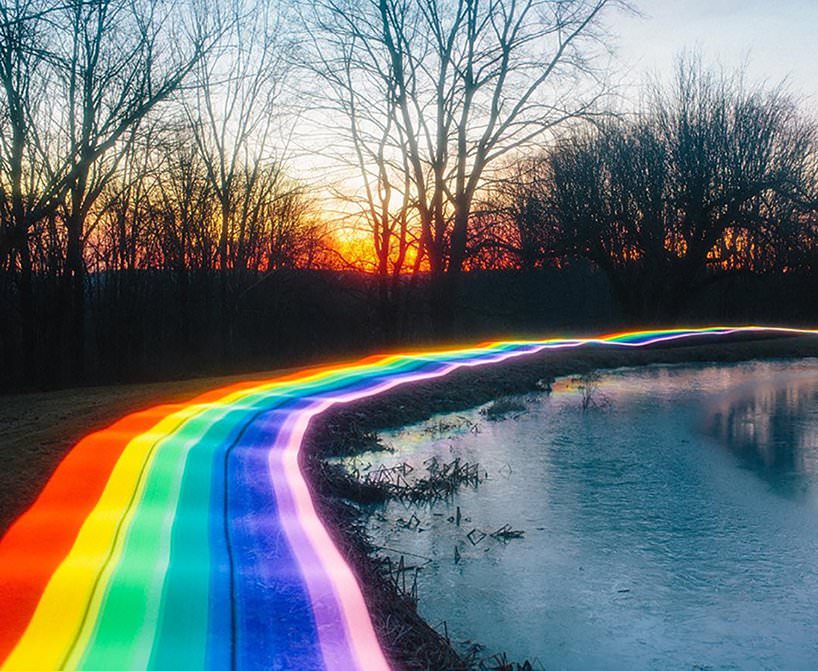
The Rainbow Road is Rather Winding

The road is long.

With a many a winding turn

That leads us to who knows where.
Who knows 
where?

                ****

These lyrics from the pop song “He Ain’t Heavy, He’s My Brother” written by Bobby Scott and Bob Russell and made famous by The Hollies, Neil Diamond and others metaphorically describe the events in LGBTQ Baltimore during the 20 years that Baltimore OUTloud has been existence. The twists and turns are seemingly endless. Along this road, which is alternately rough and smooth, are triumphs, defeats, jubilation, tragedies, courage and determination.

The birth of OUTloud itself was an unlikely development with its first publication occurring in May 2003.  It came about when the editor of Gay Life, the communication arm of the Gay and Lesbian Community Center of Baltimore (GLCCB), sought more independence in its content, and along with other investors launched a new company, Pride Media, Ltd., that published a newspaper, Baltimore OUTloud. A bunch of writers and staff who had been volunteering at Gay Life headed over to the nascent periodical.

The GLCCB and OUTloud had an uneasy co-existence at first. Some would characterize the situation as contentious. Over the years, however, there was a rapprochement, and both Gay Life and OUTloud co-existed peacefully for the betterment of the community.

In 2016, the road took another turn and a deal was struck between OUTloud and the GLCCB whereby Pride Media, Ltd. bought out Gay Life and in effect, merged providing space in OUTloud to publicize GLCCB events, such as Pride, and its programs.

The fact that these entities reached such a significant and collegial agreement after the early frosty relations marks one of the major turns in Baltimore’s rainbow road.

Politically, that rainbow road was fraught with speed bumps and potholes along the journey. Yet, it took us to some important destinations but by no means final. Marriage equality is a prime example.

When OUTloud first hit the streets on May 16, 2003, the legal recognition of same-sex couples was merely a pipe dream. The only article in the first issue that remotely touched on the subject was a lawsuit filed in federal court to strike down a Nebraska constitutional amendment that would prohibit same-sex relationship recognition.  Very few envisioned the legalization of same-sex marriage, not with all the conservative and religious opposition getting in the way.

As the years passed, momentum for achieving what was once considered impossible gained steam. With the work by key LGBTQ organizations, hundreds of dedicated individuals, elected officials and a society that was growing more amenable to fairness and equality, that pipe dream became a reality. Marylanders voted to support marriage equality, and the U.S. Supreme Court in effect made it legal in every state. And whoever thought that the Mayor of Baltimore, the Governor of Maryland and the President of the United States would all advocate for marriage equality?

Baltimore OUTloud was there every step of the way covering the setbacks and successes, which are intrinsic to any civil rights movement. A little less than 10 years after its first publication, OUTloud was present at Baltimore’s City Hall to chronicle the first same-sex weddings in Maryland. And that was followed up with a state law prohibiting discrimination based on gender identity that survived heated and nonfactual rhetoric from opponents.

So the road seemed to have unbended with the surface appearing to be smooth. But another turn has been encountered: a sharp turn, which is making the journey more perilous.

The far right has seized upon queer-affirming books in school libraries, drag shows, pronoun usage, transgender athletes and a revived emphasis on parental control in education as a way to justify attacking the LGBTQ+ community. They have falsely accused LGBTQ+ people of “grooming” children and wrongly conflating drag queens with transgender individuals.

These ideas, which have been politically successful in many conservative areas, are threatening the LGBTQ+ communities and the gains we achieved, thus putting all of us at risk. In fact, hundreds of bills are before state legislatures (some already passed) that largely target transgender youth especially gender affirming care.

From the dim prospects of marriage quality to the celebratory same-sex weddings, to attacks on trans kids, to asserting drag shows more of a threat to children’s safety than guns, along with the condemnations of Pride events, the turn in the road is so sharp, it borders on being a u-turn.

Another turn occurred since publication day, which also could not have been predicted. Twenty years
ago, the Mount Vernon district of Baltimore, dubbed as the “gayborhood” because of the plethora of LGBTQ and LGBTQ-friendly bars, clubs, shops and restaurants concentrated in a small area, was a bustling place. On a given Saturday night, people were dining inside and outside the City Café. Lines of patrons were seen waiting for admission into the Club Hippo. Across the street, Grand Central was packed where you could hardly move. Leon’s, The Drinkery and Jay’s on Read attracted their own devotees.

Almost suddenly in 2015 when the Hippo actually closed its doors, the gayborhood began its descent. The ending of the 43 year-old mainstay of Mount Vernon—the largest dance club in the state that attracted visitors from all over the U.S. and beyond—signaled a turn that became irreversible. Grand Central, the next largest club in the area, was put on sale. While it tried to hang on as a viable alternative to the Hippo, a combination of factors led to its demise, not the least of it was the Covid pandemic. Jay’s on Read closed ostensibly for financial reasons. The effects of Covid claimed the City Café and the Mount Vernon Stable, which were popular eateries in the area. Flavor, the only lesbian bar in Mount Vernon, was also forced to close its doors.

Prior to these losses, the community center, which is now called the Pride Center of Maryland, had moved a mile or so northbound to be closer to a population that would benefit more from its programs. Not only did the Center leave the gayborhood but the annual Pride parades and block parties—a staple of the area every June—left with it.

Earlier, Lambda Rising, a well-known LGBTQ+ bookstore chain, went out of business succumbing to competition from online book retailers.

While other establishments have sprung up to serve the community, the identity of the gayborhood is not the same with all of these missing pieces gone. It just seems like a long time between May 2003 and now with so much happening, both good and bad.

But what remains constant despite the twisting rainbow road over 20 years is the fact that Baltimore OUTloud remains the only LGBTQ publication in Maryland.  It has weathered a precipitous decline in interest in print periodicals, the passing of its co-owner, the effects of the pandemic as well as financial challenges that all newspapers and magazines are facing.

Other publications have folded, among them and surprisingly, the City Paper. But here we are 20 years later: Baltimore OUTloud is still standing and poised to continue its coverage along that winding rainbow road that leads us to who knows where.


Thursday, May 14, 2015

The LGBT Press is Needed More Than Ever


Two years ago, on the occasion of Baltimore OUTloud’s 10th anniversary, I marveled how so much has changed over that time in terms of progress for LGBT individuals locally and elsewhere while at the same time acknowledging there was plenty of work remaining.  I expressed my gratitude for the opportunity to be an eyewitness to those historical developments.


Displaying copies of Baltimore OUTloud  Photo: Bob Ford
Now as we celebrate the paper’s 12th anniversary, more progress has been noted and much work still needs to be done.  What should be considered somewhat remarkable is the fact we are still here as a publication and not only hanging in there against strong headwinds, but expanding.
That’s right, expanding.  Baltimore OUTloud with its new Out in the Valley section has turned into a regional publication that will now cover LGBT news and events from Frederick west to the West Virginia panhandle and southern Pennsylvania.  This has traditionally been an underserved area as far as LGBT newspapers are concerned, and the hope is that Baltimore OUTloud can fill that void.

Despite the mainstreaming of LGBT news (a welcome development in that past coverage from the straight press had been focused on the more controversial elements of our communities) and the onset of mobile devices to find and receive news in an instant, LGBT publications remain useful and valued.
Lest we forget, consider how the gay press stepped up when mainstream media chose not to report on such huge points in our history.  Examples include: Stonewall (mainstream press coverage at the time marginalized those who participated in the uprising), the AIDS epidemic, key court rulings, anti-discrimination efforts, the repeal of don’t ask- don’t tell, the battle for marriage equality (though mainstream coverage has improved considerably in the last few years), trans* equality, hate crimes, international oppression, the fight for sexual freedom, and so on.

While these were covered by the LGBT press, the mainstream media portrayed homosexuals in a negative light, focusing on stereotypes.  Gays were seen as unhappy, lonely, flamboyant, promiscuous and incapable of having relationships.  Society’s attitudes towards gays and lesbians were negative; the media simply reinforced them. 
“There was a ‘setting straight of the record’ energy in the early days of the gay press,” says Tracy Baim, Editor of Gay Press, Gay Power and Publisher/Editor of Windy City Media Group.  “It was all about representation and making sure that we were heard and seen. The straight media forced the formation of the gay press just like they forced the need of an African-American press because they stereotyped or ignored blacks and gays.”

The LGBT press was needed then and it’s needed now more than ever. When a mainstream media outlet does a story on us, it doesn’t always seem to be complete.  LGBT newspapers tend to provide more depth to a story and offers added context.

“The role of gay media continues … because there are ... many cases where the mainstream media are simply parachuting into a story and therefore providing an incomplete and thus inaccurate picture for their readers,” said Baim.
Michael Lavers, a reporter for the Washington Blade, agrees.  “The LGBT media brings a unique perspective and insight to an LGBT-specific story that mainstream media simply cannot,” he explains.  “For example, the first issue of the [Washington] Blade was published in October 1969 – four months after the Stonewall riots. We have continuously reported on LGBT-specific stories that directly impact the community here in D.C. and beyond since then. The LGBT media shed light on these issues long before the mainstream media ever did.”

Some of these topics would include holding our LGBT leaders accountable and providing useful LGBT-specific health information and news about HIV/AIDS and the latest treatment regimens.  Rarely is that found in the mainstream press.
We explore intra-community homophobia, transphobia and racism with greater candor than you would find elsewhere.  On the positive side, we shine a spotlight on the good works of LGBT individuals and allies as well as the organizations that serve our communities.

"The LGBT media brings a unique perspective and insight to an LGBT-specific story that mainstream media simply cannot."--Michael Lavers, Washington Blade

Moreover, with our diverse communities, the LGBT press provides a platform for community members to air their views so their voices could be heard.  
“There will never be a dearth of stories for us to do. There is always going to be more news for a particular community than can be had in a generalized newspaper,” Baim points out. “I feel very strongly that there will continue to be a need for the gay press. The challenge is for us to do a better job of it.”

We understand in this modern age that more folks, especially the younger generation, receive their news from online sources or are sent links to articles via social media.  With the changing technology, newspapers need to be nimble to keep up with these changes and trends.  News travels fast, and no one can afford to be left behind.  To that end, Baltimore OUTloud has, besides its website, a Twitter account and a Facebook page to satisfy the thirst for instant news.

Nonetheless, when someone opens a link to a particular story, he or she tends to stop there.  The remainder of the publication, which contains useful and informative stories, commentary and ideas to improve the reader’s quality of life, is not necessarily read.  By not opening and perusing a newspaper, people will miss those.
There is no substitute for experiencing all the information contained within a newspaper.  Knowledge is important especially information that is provided to LGBT readers and allies that you won’t see elsewhere.   

That is why there is tremendous value in publishing newspapers, such as Baltimore OUTloud, for 12 years and counting.  As the old adage goes, “We here,. We’re queer. Get used to it.”

Friday, August 29, 2014

Baltimore, Baseball and Gay Love—'Queen Henry' Touches all the Bases


Begin with a straight, homophobic, narcissistic, womanizer who happens to play for the Baltimore Orioles.  Add to that his out-of-the-blue discovery he is gay, which is followed by his falling head over spikes for a man.  Toss in the swirling rumors of a gay player on the Orioles and the inherent clubhouse homophobia from his manager, some of his teammates, and his father, and you have the recipe for a glorious, deliciously written work of fiction, Queen Henry, by local author Linda Fausnet, a lifetime Orioles fan.

A successful screenwriter and a professed ally for LGBT rights, Fausnet announced that all proceeds from the sale of this book will go to the Harvey Milk Foundation. 
Set in Baltimore, Henry Vaughn, Jr., who has a thing for Peach Schnapps, is a rather fun-loving outfielder who is immensely popular with the fans mainly because, as a self-described “attention whore,” he leads them in the seventh inning sing-along to Y-M-C-A while standing atop the dugout.  After a game, Henry carouses with his teammates, and since he is attractive, famous and single, he effortlessly finds a different woman to take home each night.

Despite his macho image, Henry secretly longs to be a Broadway performer.  His homophobic father, manager and teammates instill the anti-gay dogma in him, and he frequently uses the f-word primarily because this is the environment in which it is expected and accepted. 

Weakness or the perception of same is one of the greatest fears of a male athlete.  That is why Henry hides the use of an inhaler to deal with his asthma and instead decides to participate in a clinical drug trial at Johns Hopkins Hospital.  After taking the drug, administered by a medical technician named Sam, a gay man, Henry finds out shockingly while jogging the next morning he is attracted to men and lost his desires for women.  Just like that.
Panicky and confused, Henry tries to explain the situation to Sam who vehemently denies the drug had anything to do with this condition and that Henry must have been suppressing his true sexuality all along.  They don’t hit it off well as Henry’s homophobia comes through loud and clear; the tension between the two remains throughout a good portion of the book.

Nonetheless, Sam introduces Henry to a close friend and colleague at Hopkins, Thomas, who has helped people come to grips with their sexuality.  They experience a deep attraction to one another and ultimately fall in love. 
Like any good author, Fausnet seductively draws the reader into the romance and sexual steaminess with great skill, describing the relationship between Henry and Thomas with sensitivity and emotion. To her credit, the passionate sexual scenes are tastefully conveyed—full of affection and heat without seeming tawdry.

The underlying question is: was Henry gay all along and the career and family choices he will be confronted with or will the drug wear off and he returns to being straight?
Without proceeding further to reveal the outcome, I can say that some readers may be disappointed with the ending (as I was initially) but others may like the ending (as I did eventually). 

Fausnet’s writing is extraordinary in this fluid, fast-paced tale.  Narrated in the first person by Henry, the story reads like his own journal as he reflects upon each conversation he has and reveals his inner thoughts.  We get to delve into Henry’s psyche enabling us to not only understand the challenges and quandaries he faces, but also to enthusiastically root for him.  He wins us over.
Fausnet demonstrates an uncanny understanding of gay male emotions and sexual desires (she is a happily married heterosexual mother of two) and will keep you absorbed as Henry and the other characters in the novel navigate through the events shaping their lives.

Her character development is splendid.  You feel that you know each one intimately, and most of the characters are endearing and sweet.  This is especially true of Alice, an attractive bartender at a bar Henry frequented to pick up women, sidestepping Alice by not recognizing her myriad appealing qualities.    
The underlying question is: was Henry gay all along ... or will the drug wear off and he returns to being straight?
I suspect Fausnet purposely left out specific physical descriptions of the characters other than vague images such as beautiful eyes, muscular arms, etc. so as not to distract the reader from the underlying messages in the novel.  But I think it would have been fun and would have added context to be able to visualize each person as we turn the pages.

Fausnet’s references to Baltimore provided additional enjoyment to the storyline especially for us locals.  Besides Hopkins and Camden Yards, the Hippo is frequently mentioned throughout.  The Pride parade is a turning point scene.  The Baltimore Sun plays a vital role, and even Baltimore OUTloud is mentioned albeit as a support group marching in the Pride parade, not the wildly popular LGBT newspaper that it is!
Though there are many cleverly written light moments throughout Queen Henry—one that is particularly hilarious is when the Orioles players were speculating as to whom the gay player may be—Fausnet touches upon key social messages that are in play today. 

Despite the revelations by Jason Collins, Michael Sam and other athletes that they are gay, there is still great concern by gay male athletes to come out and face the potential hostilities.  Fausnet effectively describes the homophobia that exists in the locker room and the pressures that result. 

She began writing the novel a few years back when the environment for gays and lesbians was not as favorable as today. Therefore, I don’t think the current local media would be in the “gotcha mode” as portrayed in Queen Henry.  The same is true for the teammates who now would be wise not to publicly utter the f-word in dealing with the subject.  Moreover, the real Orioles today would not be inclined to openly express any anti-gay epithets as owner Peter Angelos, who was a substantial contributor in the fight for marriage equality in Maryland, would put the kibosh on that.
The other main theme is how Henry recognized his own homophobia, and once he learned he was gay understood how other gays and lesbians can be easily hurt and their lives wrecked by this bigotry and hatred.  He transformed his attitude once he saw himself as a victim.  It is a powerful message.

Queen Henry is a truly well-written novel with potent drama with campy humor laced throughout.  Though it contains important messages to LGBT folks and others, it is also a gorgeous love story and one that should not be missed.  Fausnet swung and hit a home run.
___
Queen Henry, Linda Fausnet, published by Wannabe Pride; July 2014; 360 pages; paperback (ISBN: 978-0-9916525-0-1); $10.62 on Amazon.com or wannabepride.com, her website to promote writers and books; $2.99 on Kindle.

Friday, April 25, 2014

Mainstreaming or Not, the LGBT Press Remains Vital


A phenomenon has been occurring recently that would have been deemed inconceivable even a decade ago.  LGBT people are becoming “mainstreamed”—a goal for many but not for everyone.   

Clearly, mainstreaming is a by-product of the equality movement; we’re just like everyone else—for better or worse. Some people reject the mainstream and prefer a separate identity.  Yet, with polls showing growing acceptance on most LGBT issues at a jaw-dropping pace and with more folks coming out as fast as you can say “gay pride,” we are every bit a part of the culture.  Even straight people are now ho-hum when a gay athlete comes out.
This social transformation is evident as more LGBT individuals eschew gay bars and are flocking to straight establishments at an amazing clip. LGBT bookstores have gone out of business partly because of straight bookstores selling LGBT books.  (Oh yes, the Internet is a key factor as well.)  Gay people used to feel comfortable residing in an urban environment where there are enclaves of similar folks, but lately many have moved out to the suburbs to assimilate there.   
Mainstreaming is obvious in the media as well.  No longer is it a water cooler conversation when a TV show has a gay character.  Ellen DeGeneres, who made headlines in 1997 when she came out, is embraced by virtually everybody. Neil Patrick Harris, who is also openly gay, is a coveted host of highly-rated award shows.  Few are shocked or even care when a celebrity opens the closet door.

Indications of this trend are apparent in the print media as well.  Our local Baltimore Sun, continuing its enthusiastic editorial support for LGBT causes in recent years, initiated an LGBT-oriented blog “GayMatters” a year ago, and it has done a creditable job in presenting LGBT news.  As such, it brings in a broader audience and helps the populace to better understand our issues.     
Kudos to the Sun for giving us the attention that was lacking not that long ago when we couldn’t buy any coverage in print (or TV for that matter) except for the flamboyance and fetish-costumed participants at gay pride parades.  Of course, that’s changed now, but there is a red flag unfurling next to the rainbow one.  
Regardless of the positives associated with mainstreaming, we must not overlook the need for our own LGBT press.  Some LGBT individuals and organizations, as an example, may be tempted to consider mainstream publications as the default outlet to share information.  That would be a mistake.

I’ve been covering Baltimore’s LGBT scene for well over three decades—longer than anyone here—and I’ve seen the value of our own press in informing our readers and how it has impacted our community by helping to improve our lives.  Despite the best efforts of the mainstream media, we are better equipped, even with fewer resources, to cover far more political and personal stories that are relevant to the LGBT community.  This specialization is similar to other publications that focus on a particular ethnic group or religion.
“The gay press is the only press entity that truly understands the LGBT people,” says activist Rev. Meredith Moise who has written commentary for both Baltimore OUTloud and Gay Life.  “The gay press humanizes us in a way no other press entity can.”

Our record over the years speaks volumes.  We covered the AIDS crisis in-depth before any mainstream media outlet would touch it and continue to offer health advice specifically for the LGBT population.  We chronicled the seminal court decisions affecting our standing in the country. We described the long and difficult road to end discrimination in Baltimore and in Maryland as well as in the military. 
We analyzed elections and their impact on our community. At the same time, we identified those elected officials, individuals and groups who would stand in the way of progress.  We also acknowledge that the job is far from over with gay executions, bashings, bullying, discrimination, marginalization and other actions directed against the LGBT community still continuing globally and requiring coverage.
On the flip side, we have profiled those who are working for the betterment of all LGBT individuals when no mainstream publication would or could.  And we continue to give voice to many in our diverse community who lack such a platform.

“The LGBT media brings a unique perspective and insight to an LGBT-specific story that mainstream media simply cannot,” says Michael Lavers, a young but seasoned journalist for the Washington Blade, dubbed accurately as “the paper of record” for the LGBT community.  “For example, the first issue of the Blade was published in October 1969 – four months after the Stonewall riots. We have continuously reported on LGBT-specific stories that directly impact the community here in D.C. and beyond since then. The LGBT media shed light on these issues long before the mainstream media ever did.”
The LGBT press must reach out further than our own traditional readership to succeed.  “I believe that as a news vehicle for the LGBT community, we have a responsibility to inform not only our own community (diverse as it is), but also the population at large,” Daniel McEvily, editor of Gay Life, explains. “We have a platform to inform and enlighten those outside our community with our faces, our stories and our voices. If we do our job right, we can proactively change attitudes and hearts.”

For decades, the LGBT press has served us well by enlightening our community and allies in matters that not only interest us but continues to offer an unfiltered glimpse into how the world sees us and helps us to respond.   It has been a critical institution on the journey towards equality.  Lest we forget our historical contributions, it must remain so.

Tuesday, June 26, 2012

Banking on the 'Big Mo'


Courtesy of Jay W Photos
There’s no question that the rainbow gods are smiling on our LGBT community.  They ordered up absolutely glorious weather for the annual Baltimore Pride celebration right before an oppressive heat wave gripped the area.  This may be a sign that things MUST be going well to experience such good fortune.
That’s been the talk—how we have momentum or the “big mo” on our side as we enter the critical months leading up to Election Day when the law to legalize marriages between same-sex couples will be put to the voters by a referendum.  This momentum will hopefully propel us to reach that coveted goal.

There is ample reason for the optimism. 
The president’s complete support for marriage equality could turn out to be a game changer.  In a state where he enjoys widespread popularity, Obama’s revelation could tip the balance our way by convincing those who may not have been saddled by conservative religious dogma to lean towards fairness. The NAACP’s unequivocal endorsement framing marriage equality as a civil rights issue was also huge.  

Moreover, with the Dream Act referendum scheduled to share the ballot in Maryland with same-sex marriage, the National Council of La Raza, the largest Latino civil rights organization in the U.S., announced its support for marriage equality.

Country superstar Carrie Underwood’s backing of same-sex marriage to the chagrin of some of her conservative fans may have appealed to a different demographic altogether.  To that point, don’t dismiss the power of celebrities who, through their visibility and popularity, command a higher level of influence than ordinary folks.  America’s infatuation with celebrities and entertainment in general is embedded in our culture to such an extent that the TV sitcom Will & Grace has rightfully been credited, in part, for the improved attitudes towards gay and lesbians in our society. 
Then there is Mary Cheney, the daughter of the former conservative Republican vice president, who recently married her longtime partner Heather Poe.   This added a sense of “ho-hum” to the hot-button issue of same-sex marriage.

We’re confident of victory,” Josh Levin, campaign director for Marylanders for Marriage Equality, wrote in the June 15 issue of Baltimore OUTloud.  “Any campaign would be thrilled to have the momentum we’ve seen recently.”
Levin has also cited favorable poll results to augment the momentum perception but he quickly pointed out to me that he will not rely on them.  He knows better than to fall into that trap. “They offer a snapshot,” he said.  That recognition of reality presents me with further cause to be optimistic.

Indeed, when marriage equality went before the voters through ballot measures in the past, we have a 0-32 record.  Even in blue-state California and purplish Maine the polls indicated a similar degree of favorability this far out from the election.  Then the garbage came from the opposition with their well-funded air attacks that helped to reverse the outcome. 
A clear difference is that none of those battles had the President of the U.S. publicly on the side of equality.  Therefore, marriage equality advocates in Maryland, Maine (again), Minnesota and Washington State experiencing ballot referenda this November may benefit from that recent level of support.

Another reason for optimism that is fueling momentum is the increased engagement on the part of the LGBT community.  Sure, way too many see politics as a toxin to be avoided at all costs.  That’s a reality in all segments of the population.  But now we’re starting to see more rainbow folks engaged on this issue.  As an example, my colleague at OUTloud, Gerry Fisher, has been on a mission to bring marriage equality to fruition by jump-starting a grass-roots movement through face-to-face contacts with voters and using social media. (See related article in this issue.)
This is crucial for votes, of course.  As important as turnout is to success, the need to recruit volunteers and raise money to counter the lies and scare tactics from the opposition is also critical.  Josh Levin feels that Marylanders for MarriageEquality can get by on $5-7 million.  Others disagree.  Evan Wolfson, founder of Freedom to Marry, estimates over $10 million would be needed in Maryland to defend the law in a referendum.

Regardless, a heap of cash needs to be raised, and fundraisers have been taking place throughout the state and will continue until November.  How do you get people to reach deep into their pockets?  They need to think they have a good chance of winning; no one wants to contribute to a losing cause.  
Yet, there is a thin line between exuding confidence of a victory and acting like it’s in the bag.  While no one wants to contribute if defeat is likely, the same thinking would apply if it appears a win is a slam-dunk,   That money could be spent on other matters.

Therefore, it behooves the Marylanders for Marriage campaign to maintain an upbeat but cautious posture, leave nothing to chance, and capitalize on the “big mo” that is ostensibly taking place now.

Tuesday, May 31, 2011

Exit Spring


By every measure, this spring has been one for the ages. You have the Arab Spring whereby several Middle East and North African countries challenged their authoritarian old guard governments in the quest for freedom.


You have the Tornado Spring in which there had been record devastation in the wake of countless climate change-induced tornadoes in the South and Midwest.


You have the Flood Spring where the mighty Mississippi wreaked havoc on neighboring towns.


You have the Osama bin Laden Spring when public enemy Number 1 was effectively put to death by our courageous SEALS 6 team.


You had the Donald Spring where the annoying egotism of Donald Trump somehow managed to dominate the political scene.


And you also have the Exit Spring. Clearly, the departure of Oprah heads the list followed not that closely by the Maria Shriver exit in the wake of Arnold Schwarzenegger’s dalliances and the sad cancellation of TV’s Brothers & Sisters. And as in the case of every spring, you have the Washington Capitals exiting the playoffs in an early round.


Perhaps not as monumental but of concern to our local LGBT community, was its share of exits this spring. While the surprise resignation of long time executive director of the GLCCB, Craig Wiley, was significant especially with Pride right around the corner, the messy, soap opera-like dismissal/resignation of Equality Maryland’s executive director Morgan Meneses-Sheets is still sending tremors among us.


And if that’s not enough, I, too, will be heading to the exit door after 26 months as Baltimore OUTloud’s managing editor. This resignation was as sudden as it was regrettable, but it was prompted by an unsolvable personal dispute with one of the publication’s owners. He shall remain nameless, and I will not discuss the details here.


I have turned the reins over to a very capable person, Dana LaRocca, whose column, “City Desk…A View from Mount Vernon,” has been a welcome and popular addition to our independent, award-winning newspaper. The paper’s co-publishers agreed to my recommendation, and she is the new managing editor.


Dana, who is a very good friend of mine, brings to this position years of experience in journalism. She is savvy, smart, and knows our community as well as anyone. But even more important, she cares deeply about our community and its issues, and that type of dedication is needed to be successful. Dana has been a tremendous booster for the paper and strongly believes that by being independent, it provides a critical voice for our readers.


I urge all of our writers, readers and advertisers to support Dana and the paper as it will continue to play an important role in presenting news and issues that affect our lives as LGBT folks. I have been working with Dana during this transition period, and I figure to write this column in the future.


My experience as editor has been challenging, fulfilling and enjoyable, and I owe it largely to everyone who has supported the paper and worked towards its success. I begin with the staff, and I am grateful for the support I received from the dedicated Mary Taylor (Sales Manager/Production), Anja Saine (webmaster), Bill Andriette (production director), Bill’s back-up Maria Nicolosi, talented Carol Baker (graphic artist, who also recently left to pursue further education in her field), Joe Velasquez who had succeeded Carol, and former distributors Jay Loane and Michael Serio.


Then there are the writers whose efforts are crucial to any successful publication. I cannot adequately express my appreciation for the loyalty and excellence of Gregg Shapiro, Chuck Duncan, and Deb Draisin whose contributions to our Lively Arts section made it one of the best there is.


Others also played important roles in providing excellent material for our readers (in no particular order): Dr. Eva Hersh (deserves special kudos), Dana LaRocca, David Placher, Jay Loane, Josh Aterovis, Jonathan Hernandez, Marty Hoegg, Wayne Curtis, Gerry Fisher, Rev. Meredith Moise, Woody Derricks, Mark Patro, Shawn Bradley, Sandy Rawls, Larry Walker, Colin Riley, Jessica Lemmo, Jesse Benson, Terrence Brower, Jeffrey Clagett, Nicole Bettis, Vann Mills, Bill Palmer, Jeffrey Clouser, Sam Kunz and the always dependable Rodney Burger.


These individuals are like family and made my job easier. Some have moved on to other priorities in their lives; others hopefully will remain with us.


A special nod goes to Bruce Garrett, whose outstanding political cartoons appeared in every single issue except one over a two-year period, giving our paper the uniqueness among LGBT publications of having our own in-house cartoonist. Bruce also did excellent work for the paper in the area of photography as did Skip Koritzer, Justin Nixon and most recently Jay W.


This has been a significant journey for me, and I don’t regret one minute of it. My work as editor and reporter for the paper has taken me to places and people I never imagined meeting, and I feel enriched by the experience.


Aside from the OUTloud family, I had been privileged to make innumerable contacts in and around the Baltimore area. As an example, I recently had the pleasure of meeting Maggie Beetz, the charming new editor of Gay Life whom I consider a colleague and friend rather than a competitor.


Organization leaders, elected officials, business people, other media representatives, publicists, etc. have added to and strengthened my journalism world and my life. I thank them for their work and their valuable contributions as sources and newsmakers.


In wrapping up this Exit Spring, I would be remiss if I didn’t thank Jim Becker, my dear friend of over three decades and co-publisher of Baltimore OUTloud, for the opportunity to serve the LGBT community in this capacity.


And above everything else, I thank my husband Bob Ford for his loyalty, patience and support. Investing this much time and effort into an endeavor such as this can truly test a relationship. But love, as they say, conquers all. Thank you, Bob, for the love, sacrifice and understanding throughout this period of our lives. I am once again all yours.


Wednesday, September 29, 2010

Cruise on the Oasis Had Baltimore Feel


When Cruise Planners and Baltimore OUTloud assembled a group of a couple of dozen to sail on Royal Caribbean's Oasis of the Seas—the largest cruise ship in the world—we all thought we'd be leaving Charm City behind for a week beginning September 18. And there were reasons to believe that. The ship had over 6,000 passengers representing 80 different countries plus an international cadre of over 3,000 crew and staff. The ship visited the ports-of-call in the Western Caribbean Labadee, a Royal Caribbean International-owned peninsula on Haiti; Costa Maya and Cozumel—both in Mexico. None of these resembled Baltimore.


And yet, it did not take too long to find out that Baltimore was a recurring theme. First off, the event was arranged by Glen Burnie-based Cruise Planners (www.BelleCruises.com, 410-760-1589) who brought together gay and straight passengers including OUTloud's Leather columnist Rodney and his partner Steve. Cruise Planners booked our rooms and dining preferences, held a tour of the ship and hosted a couple of cocktail parties for the group.


There was the fabulous production of Hairspray—a theatrical marvel that is set in Baltimore and is based on Baltimore's own John Waters original movie. As an aside, the talented cast, staging and costuming were Broadway caliber. Special kudos go to the leads Tara Siesaner as Tracy, who possesses an amazing voice and hot looking Tommaso Antico, who played the male lead, Link Larkin. Link, if you remember, is a character that the girls drooled over (and so did some of the boys).


Not only did Antico offer a solid dose of eye candy, but he also is an extraordinary dancer and vocalist in his own right. Moreover, he played in the touring production of Hairspray when it visited Baltimore's Hippodrome Theatre a couple of years ago.


Also, the vocal performances of Tim Singleton (Edna), Joel Walker (Seaweed), April Monte (Penny), Robin Myles (Motor Mouth) and Mark Petit (Corny Collins) were outstanding.


Another theatrical extravaganza, Come Fly With Me, was simply breath-taking.


Then there was one of the two stand-up comics on board, Baltimore's own Rodney Johnson. He was hilarious as he focused his act on the inadvertent comedic behavior of the passengers. Trust me, there was enough material to cover a 4-hour set. The other comic, Al Romas, who was a little raunchier but quite effective as he parodied relationships, particularly married couples.

And if that wasn't enough Baltimore, the headliner act was native Baltimorean and veteran performer Tony Tillman. Tillman in a musical and comedy show kept the mood upbeat with his sparkling personality and singing talent. The climax occurred at the end when he paid tribute to his old hero and friend, Sammy Davis, Jr. with a moving rendition of the classic Mr. Bojangles.


Although this is classified as a "straight cruise," (which is different from the Atlantis or RSVP all gay, all-the-time adventures), there are a lot of opportunities for our LGBT friends. For one thing, Royal Caribbean is extremely gay-friendly, and a good portion of the crew is over the rainbow.


That leads me to the "Friends of Dorothy" get togethers. That code phrase is used, as it was pre-Stonewall, to identify as gay without explicitly saying so. A Community Bulletin Board, not unlike OUTloud's, is posted in the Guest Relations area where events, meetings and socials are announced. Someone arranged for "Friends of Dorothy" to meet every midnight at the Champagne Bar.


From there our group doubled in size as folks from Boston to Wichita and from New Orleans to Michigan as well as the U.K. gathered to make new friends and hang out and even dance together on the ship's Disco floor. I am assuming the moniker "Friends of Dorothy" is still being used to prevent would-be "critics" of the LGBT community from disrupting the pleasantries.


Being on a cruise ship this size seemed like living in a gigantic shopping mall/hotel and restaurant complex/playground on water. This mega-ship had its own Central Park, an ice-skating rink, a carousel, rock climbing wall, basketball courts, miniature golf, several swimming pools and spas, a complete gym, a two-story theatre, an Aquatheater where an amazing diving and acrobatic show took place, an entertainment area, a promenade, a Zip Line, Flow Rider surf simulators, numerous specialty restaurants plus its lavish dining rooms, night clubs and, of course, a casino with slots and table games. There is always something going on and you can choose to do whatever you want or simply do nothing.


The Oasis of the Seas is in its inaugural season. A twin ship, Allure of the Seas, will be ready to set sail in December.


A good time was had by all if one can judge by the smiles on people's faces. With all that distance traveled we still felt Baltimore in our presence. You can't get homesick that way.


www.SteveCharing.blogspot.com

Thursday, September 16, 2010

30 Years and it Seems Like Yesterday


This issue marks my 30th anniversary writing for the gay press in Baltimore. I know, "how can that be? You look 29!" Yeah, I get that all the time. But the fact is, it's true. I've been writing longer than some of our writers have been on Earth.


My first article (pictured) was about New Hope, PA in September 1980. To prove how long ago it was I predicted this locale would be a potential hot spot for the gay and lesbian community, and explained I left early on a Sunday to return home to visit the Baltimore City Fair. Ancient history here.


Writing was not a new endeavor for me as I had previously written for my college newspaper and in the military. I wanted to pen for the gay press, however.


I typed the New Hope review on an electric typewriter (remember what that was?). I handed in a hard copy to the then chair of the newspaper committee, Jeff McCrae, who ran The Gay Paper. I was in the closet then and didn't include my full name—just my first name and initial of my last name, as others writers typically did at the time.


It was during the pre-computer era that The Gay Paper was put together manually by using cardboard panels, X-Acto knives and hot wax. Text was produced on galleys from typesetting machines. Oh, how the process has transformed!


My next article was about the new volleyball league that formed in Baltimore. Then I proceeded to write about a wide range of other subjects to gain experience in other areas. I covered everything from ballet to murders. I reported on the crackdown on hustling in Patterson Park and critiqued books, theatre and television. I wrote about antiques, sports as it related to our issues, travel and politics at all levels of government.


Three years after my first article I became the editor or principal co-chair of the publication and re-named it Baltimore Gay Paper. We continued to toil with the crude tools at our disposal. But the horror for us as volunteers was that we were obliged to work in the dank, window-less firetrap known as the basement of the GLCCB—a situation that I couldn't tolerate anymore; therefore, I left but continued as a journalist for the paper.


The topics for stories covered over the past 30 years have varied, of course, but we are still dealing with HIV/AIDS, harassment towards LGBT people, police and government relations, health, entertainment, violence, hatred, and the ongoing struggle for equal rights and acceptance. Alas, some of these battles never seem to terminate.


While at Baltimore OUTloud, I launched my "OUTspoken" column and blog with the same name to offer commentary on politics as well as other topics affecting our community.


What has changed the most is how people obtain their news. Newspapers all over the country not only have to compete with TV and radio, but also have to lock horns with arguably the most amazing modern-day revolution in the media: the Internet. In our fast-paced, ever-busy world, the Internet has been like an extra room in our home or office. Many of us are so transfixed to this boundless source of information and depend on it to such a degree it has become a way of life. And there are as many reasons for using the Internet as there are websites. Not the least of which is obtaining news—in a hurry.


Thirty years ago, The Gay Paper was a monthly publication, so news was essentially stale by the end of a month. Today, Baltimore OUTloud is published bi-weekly which makes the news more current, but it's still not as up-to-date as one would like. Production and editorial costs for these free newspapers render a weekly publication impractical at this time.


There was a sense of apathy among the gay community early on which remains today, perhaps more so. Not only does this prevent members of the community from being informed about current issues, it hurts our cause since there is a great need for grass-roots advocacy to realize our goals.


People will casually pick up the gay newspapers at gay bars, bookstores, cafes, markets and other distribution points, as they did 30 years ago. But gone are the days when gay activist and GLCCB founder Harvey Schwartz would stand outside bars at closing and personally hand out copies of The Gay Paper to those exiting.


I am concerned that young LGBT individuals who have been raised on the Internet see no value in LGBT newspapers. If in fact they do have some interest in LGBT news, they probably get it from blogs, or some other web-based news service.


When I was asked to be Managing Editor of Baltimore OUTloud in the spring of 2009, I understood these challenges. I have made every effort to assemble a staff of dedicated writers who are diverse and talented and could appeal to every demographic. My goal has always been to offer our community excellence in local news coverage and to ensure there will be something for everybody within our pages.


For centuries, newspapers have provided an invaluable opportunity to read what one is interested in and skip those articles that do not appeal. But to be able to have news; advertisements of events, products and services; commentary; humor; features; reviews, etc. all in one location where individuals can peruse at their own pace, there is nothing better than enjoying the paper in a comfortable setting without having to move a mouse.


What hasn't changed throughout this 30-year journey is that my husband Bob has been with me every step of the way.


www.SteveCharing.blogspot.com.